
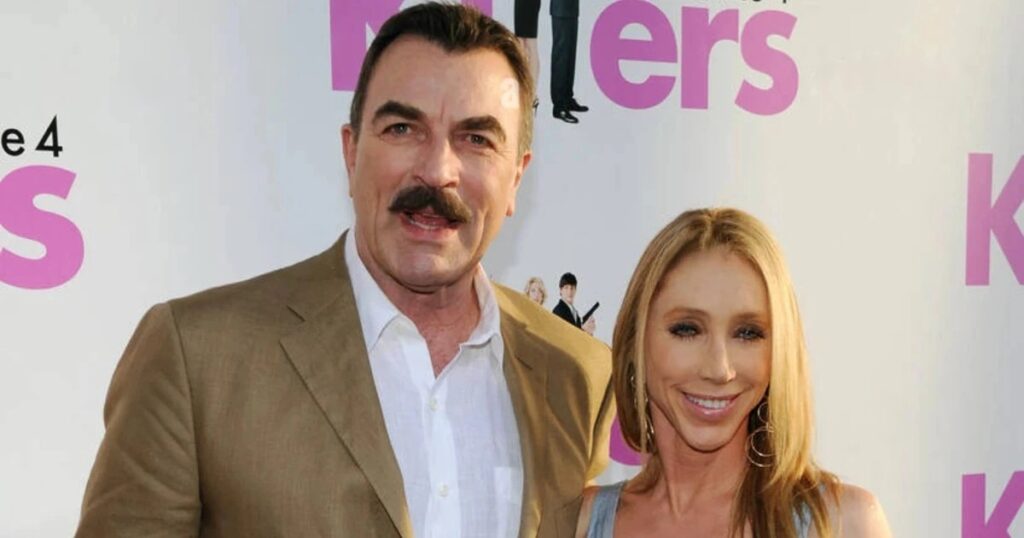
The mustache is the brand. The quieter story is how Tom Selleck and Jillie Mack have kept a Hollywood marriage standing since 1987 without turning it into a public performance.
They met in London in 1983, backstage at Cats, where Jillie was playing Rumpleteazer. Selleck has always said he was hemming and hawing. She had to go on, so she cut through it: Did he want to meet for a cocktail?
They married on August 7, 1987, in a small Lake Tahoe chapel under fake names, with almost nobody watching. Shortly after, he walked away from Magnum, P.I. so they could raise a family. He has called that decision one of the best of his life.
Home for them has long been a sprawling ranch in California’s Hidden Valley — avocados, horses, the kind of property that asks for real work.

When Selleck was away filming Blue Bloods in New York, Jillie ran the place. He has described the two of them as independent, with a lot of yin and yang. He’s the quieter one. She lights up a room. “Apart from being my wife, she’s my friend,” he told Closer Weekly.
That friendship shows up in small, almost boring habits. On the ranch, Selleck gets up before Jillie and puts on the teakettle so her water is hot when she wakes. “I think I’m pretty romantic,” he said.

When they couldn’t be together for a milestone anniversary during Blue Bloods, he still sent flowers — and then went to see Cats again, just to remember how they started.
Tabloid coverage over the years has also painted a picture of handwritten notes and poems left around the house while he was on the East Coast, plus a private pact early on to keep fights from becoming theater.
Those details usually arrive through anonymous sources, so take them as color, not sworn testimony. What Selleck has said on the record is simpler and harder to fake: after the first blaze of romance cools, you either become partners or you don’t.
“We’re full partners,” he’s said. In another interview: relationships are tricky, but if you love somebody and like them, you’ve got a chance.
In a 2024 People interview tied to his memoir You Never Know, he came back to the same point — what he loves most is “the friendship,” and Jillie’s sense of humor.
He also talked about reading Blue Bloods scripts with her beside him. By the end of that year, the series had closed its long run.
The commute is gone. What’s left is the same foundation that outlasted Magnum fame, a public fight over water use at the ranch during California’s drought years, grief, aging parents, and every other ordinary storm that can hollow out a marriage from the inside.
Nearly forty years in, the story isn’t that they never had distance. It’s that they treated the distance like something you manage — tea on the stove, flowers when you’re apart, a friendship that still comes first.