
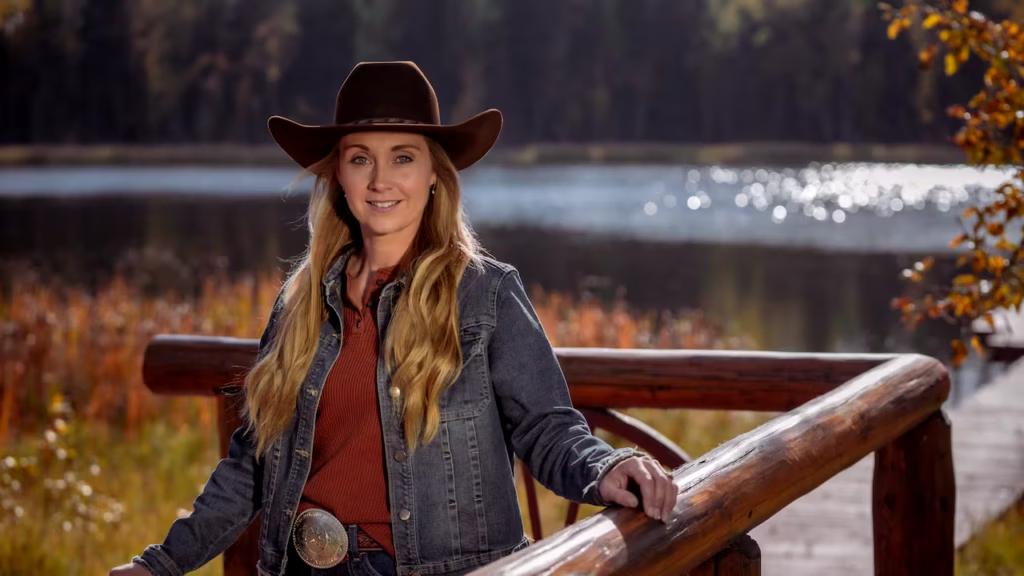
For nearly twenty years, Amber Marshall hasn’t just played Amy Fleming—she has, in almost every way that matters, lived her life.
Marshall was just 19 when she was cast as the intuitive young horse whisperer at the heart of Heartland, CBC’s long-running drama set against the rolling foothills of Alberta. But her connection to the life portrayed on screen began long before cameras started rolling. She was riding by age five, got her first horse at ten, and spent her childhood volunteering at animal shelters with dreams of becoming a veterinarian.
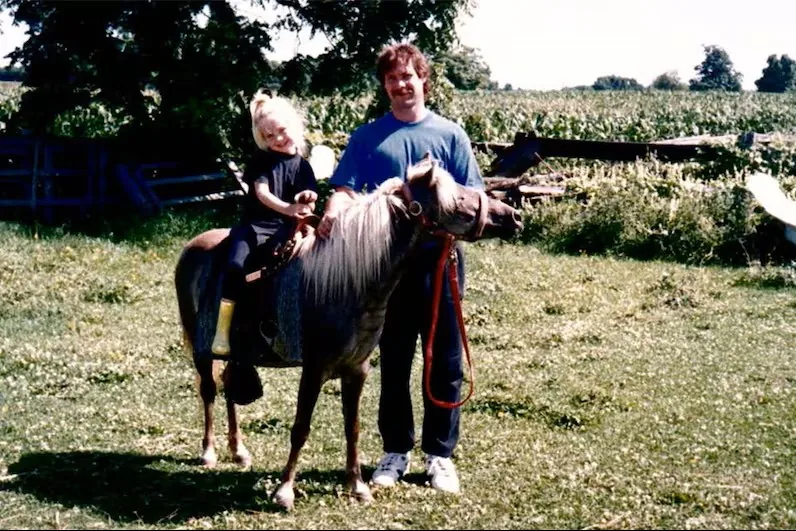
“I knew that that’s who I wanted to be when I grew up,” Marshall, now 38, told CBC’s Ian Hanomansing. “I wanted to be Amy Fleming.”
Two decades later, the line between actor and character has all but disappeared.
Originally from London, Ontario, Marshall permanently relocated to Alberta during Heartland’s second season. Today, she runs her own working ranch populated by horses, cattle, and foster dogs, while operating the Foothills Animal Support Society to help low-income pet owners access veterinary care.
“I can never see myself relocating again,” she said. “This is home for me.”
Now entering its milestone 20th season, Heartland stands as the longest-running scripted one-hour drama in Canadian television history. What began in 2007 as a modest family drama based on Lauren Brooke’s books has evolved into a global powerhouse, broadcast in more than 120 countries.
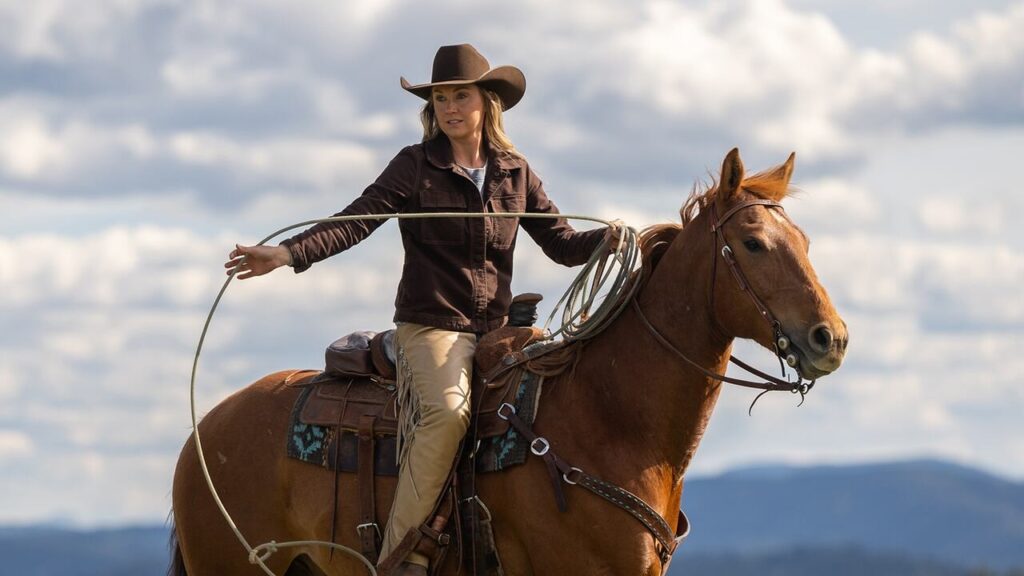
Much of that enduring appeal comes from the fact that the Bartlett-Fleming family was allowed to age in real time. Over 20 seasons, viewers watched Amy grow from an impulsive teenager into a wife, mother, and eventually a widow following the sudden death of Ty Borden (Graham Wardle). Lou (Michelle Morgan) built businesses while raising daughters, while grandfather Jack (Shaun Johnston) remained the steady patriarch anchoring them all.
That generational continuity has fostered a rare, deeply personal bond with viewers. At a fan gathering in Alberta this past August, visitors arrived from around the world—including mother-daughter pairs who flew in from Manchester, England, and Brisbane, Australia, just to stand where the show is filmed.
Marshall often hears from fans who were infants when the pilot aired and now watch as young adults, or who leaned on the series during times of grief.
“It’s special to know that a show can resonate with someone who’s never been to Canada, that’s never been to Alberta,” Marshall said. “They can watch it and feel a connection to those characters and to that Heartland family.”
A major part of that draw is the landscape itself. Fans frequently ask Marshall whether the dramatic mountain vistas and endless pastures are green-screen illusions.
“The Heartland vista has become a character of its own,” Marshall said, noting that Alberta’s unhurried rhythm reshaped her own outlook on life. “I love being able to walk out in the field, say, ‘You know what, I probably should be doing something else, but I’m just going to really enjoy this nice day.'”
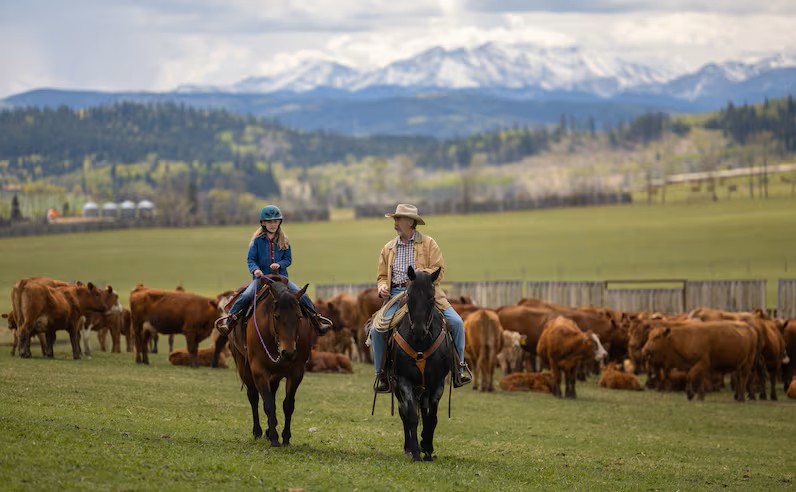
That calm presence extends directly onto the set, where working with animals demands absolute stillness.
“Horses are just living in the moment,” Marshall explained. “They don’t read the script, they don’t know what’s going on. You cannot have a tense set with animals and expect them to perform. We have to be quiet. We have to be relaxed. We have to be calm.”
In an era of television defined by high-stress drama and cynicism, Marshall believes Heartland endures because it offers comfort without artificial sentimentality.
“It makes you feel settled,” she said. “It makes you feel like you’ve done something right for your mind and body.”
Because the series is built around family evolution rather than a rigid premise, Marshall sees no expiration date. When asked how many seasons she thinks the story has left in it, she didn’t hesitate:
“Oh gosh, another 20. I’ll do Heartland till I die. This is my life. I love being in Western Canada. I love being on a ranch. I love being surrounded by my animals.”