

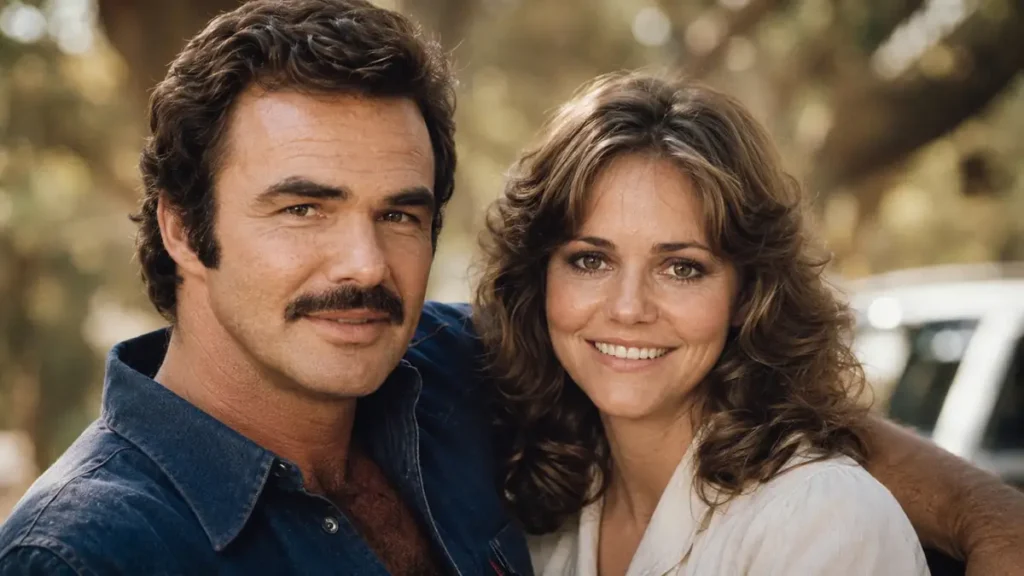
Burt Reynolds spent his final years telling anyone who would listen that Sally Field was the love of his life. But there was just one problem: Field hadn’t spoken to him in 30 years.
That massive gap—between the romantic story he wanted to tell and the reality of what she actually lived through—is the real heart of their story.
The two met back in 1977 on the set of Smokey and the Bandit. The goofy car-chase movie became a massive box-office hit, but it also sparked something off-screen. At the time, Reynolds was a massive movie star. Field was 30 and still mostly known for her TV work in shows like The Flying Nun and Sybil. The director didn’t even think she was sexy enough for the role, but Reynolds fought for her and got his way.
Looking back, Reynolds said the chemistry was obvious to anyone with eyes. “Audiences were right,” he later said. “They were watching two people fall in love.”
They dated for about five years, making a few more movies together before splitting up in the early ’80s. By then, Field’s career was skyrocketing; she won Oscars for Norma Rae and Places in the Heart. Reynolds’s career, sadly, went in the opposite direction.
He never quite let go of her. In a 2015 interview, he called her the love of his life and blamed himself for the breakup. Two years before he died, he told People that the feeling of loss had never left him — and that he had heard, through her son, that she still talked about him. He seemed to take comfort in that.
Field’s side of the story, however, was a lot more complicated—and she waited until after he passed away to finally share it.
Field’s side of the story, however, was a lot more complicated—and she waited until after his death to tell it fully.
When Reynolds died of a heart attack in September 2018 at age 82, Field released a polite statement saying he would always be in her heart. But her 2018 memoir, In Pieces, told a very different story. She painted a picture of a relationship that was “confusing, complicated and hurtful.” She wrote that when they met, fame had already warped him, and his intense need for control spilled over into her life, too. She felt like she completely lost herself during their years together.
Field said she was relieved Reynolds would not read the book. ‘I felt glad that he wasn’t going to read it, he wasn’t going to be asked about it, and he wasn’t going to have to defend himself or lash out,’ she said, ‘which he probably would have.’
So why the 30-year silence? Field made it clear it wasn’t a mystery. While they were dating, she constantly had to deal with rumors and news reports of his cheating, fielding phone calls from embarrassed relatives. She felt humiliated, like a fool. After they broke up, she simply stopped calling. Meanwhile, Reynolds kept talking about her to the press—which she felt was just his way of performing, rather than actually communicating.
Decades later, looking back on it all, Field didn’t sugarcoat the past into some sweet Hollywood romance. She remembered him as a deeply flawed, complicated human being. Reynolds, on the other hand, spent his final years clinging to the myth of what they were.
They never got closure. And honestly, that might be the most honest thing about their entire relationship.

All comments are subject to our Community Guidelines. Opinions belong to readers.