Michael J. Fox had reached a point where memorizing dialogue was becoming a problem. He stepped away from acting in 2020, and the demands of another long day on set no longer suited him. In a new interview, he has explained what made Shrinking a workable way back.“
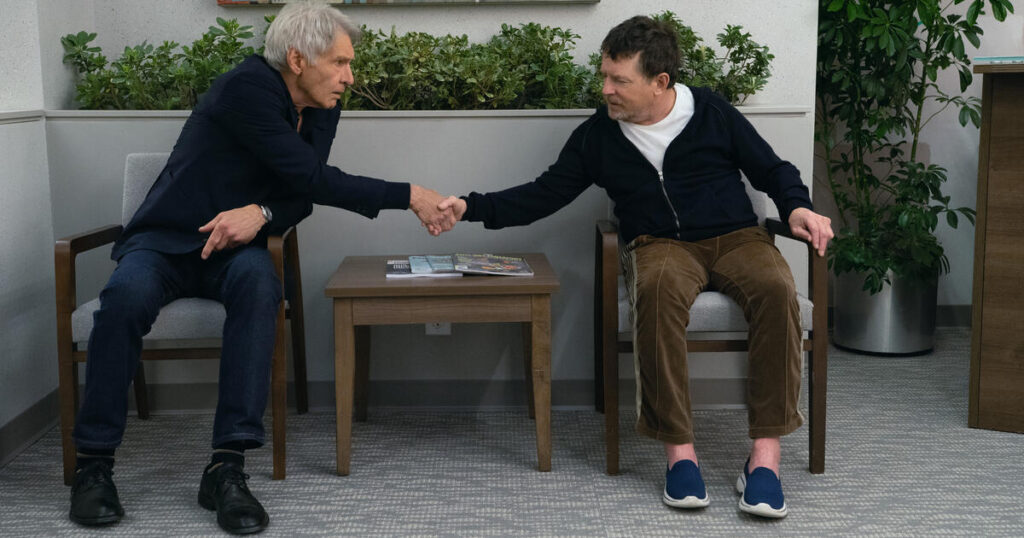
This new character allows me to show up on set as myself,” Fox told PEOPLE. Playing someone who also has Parkinson’s let him bring his own experience into the performance. He described working opposite Harrison Ford as “insanely fun.”
A role with room for his real life
Fox’s difficulties with dialogue had become apparent during his work on The Good Fight, where he faced complicated legal language. As Entertainment Weekly reports, that experience helped him recognize that he could no longer work the way he once had.
With Shrinking, how he was doing on a particular day could become part of the scene. The role gave him a way to act without separating the performance from the physical challenges he was living with.
Sharing the screen with Harrison Ford
Fox plays Gerry in the show’s third season, alongside Ford as therapist Dr. Paul Rhoades. Both characters live with Parkinson’s. The Michael J. Fox Foundation confirmed that the January appearance marked his first acting role since retiring in 2020.
Fox had already spent decades speaking publicly about the disease. He disclosed his diagnosis in 1998 and became a leading advocate for research. In Gerry, that experience also has a place in the story being told on screen.
For viewers unfamiliar with the series, Shrinking follows Jason Segel’s grieving therapist as he starts telling his clients exactly what he thinks, with consequences for their lives and his own. Segel created the comedy with Bill Lawrence and Brett Goldstein.
The third season premiered on January 28, 2026, and its 11 episodes ran through April 8, according to Apple’s announcement. Fox’s new comments revisit a return viewers can already watch, with Gerry appearing opposite Ford’s Paul in the season premiere.



All comments are subject to our Community Guidelines. Opinions belong to readers.