
Bruce Willis’ family has spent the last few years living through a kind of goodbye that does not happen all at once.
In 2022, the actor stepped away from his career after being diagnosed with aphasia, a condition affecting communication. Less than a year later, his family shared a clearer and more painful update: Willis had been diagnosed with frontotemporal dementia, also known as FTD. In their statement through the Association for Frontotemporal Degeneration, the family said communication challenges were only one part of the disease Bruce was facing.
Since then, his wife, Emma Heming Willis, has become one of the most visible voices for families dealing with dementia and caregiving. She has spoken openly about the heartbreak of watching someone you love change, but also about the practical decisions families are often forced to make long before they feel ready.
One of those decisions involved Bruce’s care.
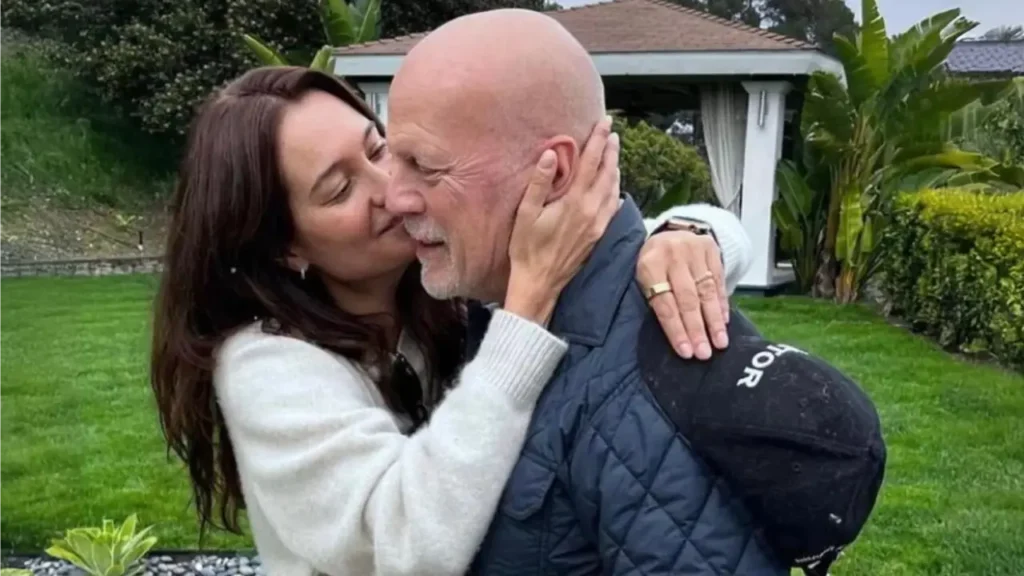
Emma has shared that Bruce was moved into a separate nearby home where he can receive full-time support. It was not a decision made lightly. For many families, that kind of step can look cold from the outside. But Emma has explained that, in their case, it allowed Bruce to receive the care he needed while giving their daughters a more stable home life and allowing the family to spend meaningful time with him as husband, father, and loved one — not only as caregivers. Recent reports have described Bruce as surrounded by love and care.
That is the part of dementia many people do not fully understand until it touches their own home.
The illness does not only affect the person diagnosed. It changes routines, marriages, parenting, memories, and the future a family thought it was going to have. Emma has said she wants people to talk more honestly about caregiving, planning, and death — not in a hopeless way, but because avoiding those conversations can leave families unprepared when the hardest moments arrive.
Her message is not that Bruce is gone. It is that the family is learning how to love him through a disease that keeps changing the rules.
Frontotemporal dementia is a progressive condition that can affect behavior, personality, language, and communication. It is different from the image many people have of dementia, because early symptoms may not look like memory loss at first. That is one reason FTD can be so difficult for families to recognize and process.
For fans, Bruce Willis will always be remembered as the sharp, fearless presence from films like Die Hard, Pulp Fiction, The Sixth Sense, and so many others. But for his family, the story now is much more private and much more human.
It is about protecting his peace.
It is about giving him dignity.
And it is about Emma using their painful experience to remind other families that caregivers need support too. After the deaths of Gene Hackman and Betsy Arakawa, Emma spoke again about that exact issue, saying caregivers cannot be expected to carry everything alone.
There are still many rumors circulating online about Bruce’s condition, including claims about final farewells and future medical donations. But the clearest confirmed truth is this: his family is still showing up for him, still protecting him, and still trying to help others understand what dementia care really looks like.
Bruce Willis spent decades playing men who survived impossible situations on-screen.
Now, the people who love him most are trying to make sure his real life is met with care, dignity, and love.