The Untold Truth of Yellowstone

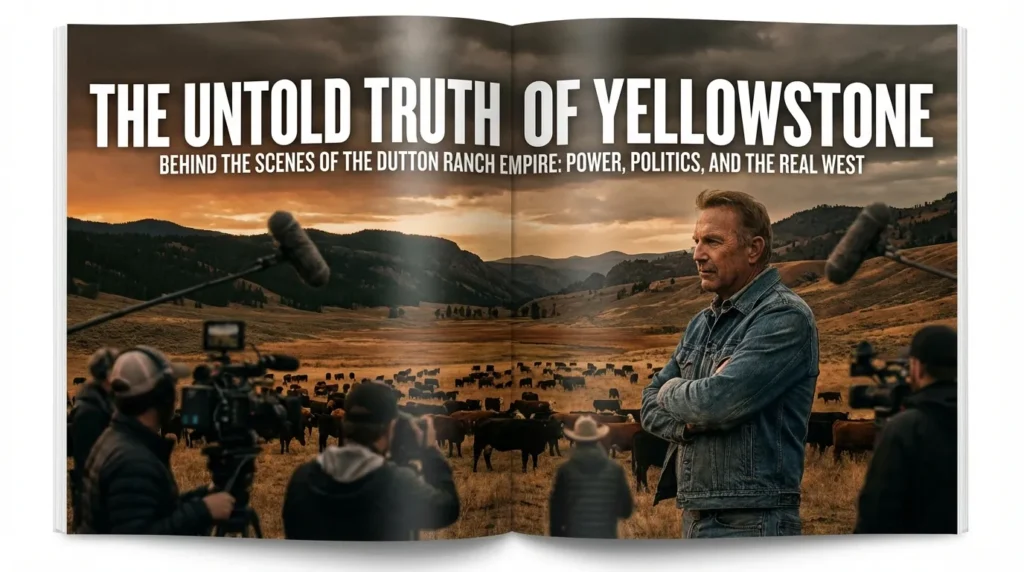
Picture it: a boardroom full of HBO executives, sitting across from a guy who looks like he just stepped off a horse, telling him they’ll only greenlight his modern Western if he can get Robert Redford to star.
Taylor Sheridan actually got Robert Redford to agree. Then HBO moved the goalposts again. They didn't get it. They thought the pitch was too dusty, too rural, too disconnected from the coastal prestige-TV formulas that built their network. So, they passed.
And in doing so, they handed Paramount the biggest, most aggressive, and most talked-about television franchise of the last decade.
The real story of Yellowstone isn't what happens on screen between John Dutton and his deeply damaged children. The untold truth is happening behind the cameras. It’s a masterclass in sheer force of will, inflated egos, and a creator who used Hollywood money to literally buy himself the American West.
Welcome to Cowboy Camp (Where the Pain is Real)
If you watch an actor ride a horse on Yellowstone, they are actually riding that horse. If they are roping a steer, they are roping that steer. Sheridan has no patience for Hollywood fakers.
Before anyone stepped onto the set of season one, the cast was shipped off to "Cowboy Camp." We aren't talking about a gentle afternoon at a petting zoo. We are talking about packing actors onto mules, sending them deep into the mountains, and making them sleep under the stars while learning how to ride cutting horses until their thighs bleed.
"I don't rehearse with my actors," Sheridan once told a reporter. "I just make them do the job."
Luke Grimes (Kayce) and Cole Hauser (Rip) had to actually learn the grueling physical labor of ranch hands. There were no stunt doubles for the wide shots. Sheridan wanted the audience to see the dirt under their nails. If an actor looked uncomfortable in the saddle, they were put back in the saddle until the fear burned off. It’s an insane, borderline-masochistic way to produce television in the 21st century. And it worked perfectly.
The Dictator of the Bunkhouse
Most hit shows have a writers' room. A dozen scribes sitting around a whiteboard, pitching arcs, breaking episodes, and arguing over character motivations.
Yellowstone had Taylor Sheridan. Period.
For the bulk of the show's run, Sheridan wrote every single word himself. He wrote the spin-offs, too. 1883. 1923. Tulsa King. Mayor of Kingstown. At one point, the man was single-handedly churning out scripts for half a dozen shows while actively managing a cattle ranch.
This explains why Yellowstone sometimes feels structurally unhinged. You’ll have a brilliant, taut, emotionally devastating shootout in one scene, followed immediately by a ten-minute montage of horses spinning in circles while country music plays. Why? Because Sheridan likes horses, and nobody at Paramount has the juice to tell him to cut the horse spinning. He is the ultimate unchecked auteur. He doesn't take notes. He takes millions of dollars and delivers raw, unfiltered cowboy melodrama.
The Costner Collision
Let’s talk about the elephant in the Montana sky. You don't cast Kevin Costner in a Western and expect him to just hit his marks and shut up.
Costner is the modern Western. He built this genre’s current iteration with Dances with Wolves and Open Range. So when you put a guy who thinks he’s the ultimate cowboy in a room with a showrunner who knows he’s the ultimate cowboy, a blowout isn’t just likely. It’s guaranteed.
The friction over Costner’s departure wasn't just a simple scheduling conflict over his passion project, Horizon. It was a fundamental clash of alphas. Sheridan allegedly demands absolute loyalty and absolute control. Costner demanded a schedule that accommodated his own directorial ambitions. The trades were flooded with leaked stories—camps blaming each other, passive-aggressive quotes, contract disputes over shooting days.
Paramount was stuck holding the bag, watching their biggest star and their most profitable creator engage in a multi-million-dollar staring contest. Costner walked. Yellowstone is ending its flagship run because of it. But honestly? It’s the most Yellowstone way for the show to die. Stubborn, angry, and refusing to compromise.
Buying the Lore
Here is the most brilliant, psychotic part of the entire Yellowstone enterprise.
Through his massive success, Taylor Sheridan didn't just build a fictional ranch; he bought a real one. When the legendary 6666 Ranch (The Four Sixes) in Texas went up for sale, Sheridan put together an investment group and bought the 266,000-acre property for nearly $200 million.
He then started filming Yellowstone spin-offs on his own property, essentially renting his own ranch back to Paramount for production. He features his own horses in the show, artificially inflating their value in the real-world cutting horse market. He isn't just making television. He has weaponized ViacomCBS's checkbook to fund his ultimate cowboy lifestyle.
He blurred the line between the fiction he was writing and the reality he was living until the line completely disappeared.
Yellowstone was never really about the Dutton family. It was a Trojan horse. We thought we were watching a gripping family drama about the death of the American West. We weren't. We were just watching Taylor Sheridan build his own empire, one paid-for horse montage at a time.
Leave a Reply